
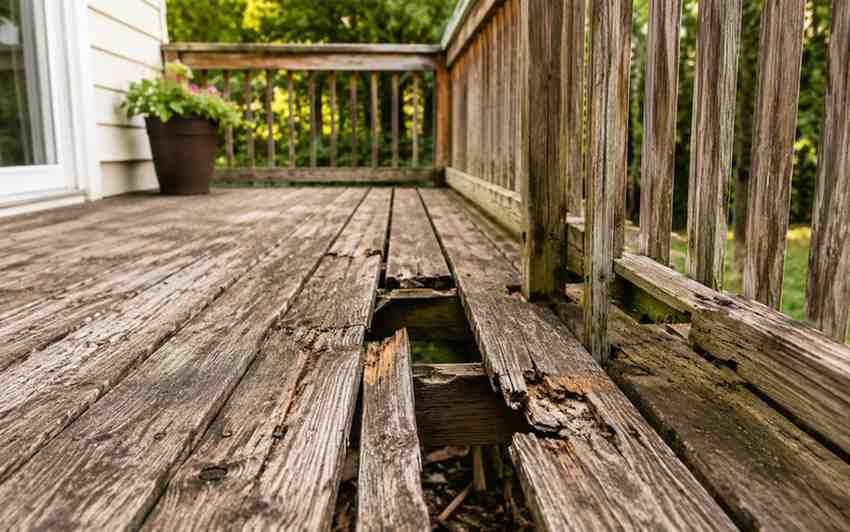
A wooden deck is designed to provide a safe, comfortable outdoor living space, but constant exposure to rain, sun, moisture, and changing temperatures can gradually weaken its structure. If you notice soft or rotting wood, loose or cracked boards, unstable railings, protruding nails, mold growth, or visible sagging, your deck likely requires immediate repair.
Addressing these warning signs early helps prevent costly structural damage, extends your deck’s lifespan, and keeps your family and guests safe.
1. Soft or Rotten Wood
Rotting wood is one of the most obvious indicators that your deck needs immediate attention.
Wood rot develops when moisture remains trapped inside the boards for extended periods. Eventually, the wood becomes soft, weak, and unable to support weight safely.
Signs of wood rot include:
- Soft spots when walking
- Wood that crumbles easily
- Dark discoloration
- Spongy texture
- Fungal growth
Ignoring rot allows the damage to spread beneath the surface and compromise the deck’s structural integrity.
2. Loose or Wobbly Railings
Deck railings are designed to protect everyone using the deck.
If your railings wobble, shift, or feel unstable when pressure is applied, they require immediate repair.
Loose railings often result from:
- Rusted fasteners
- Water damage
- Weak support posts
- Aging wood
Since railings are an essential safety feature, repairs should never be postponed.
3. Cracked, Split, or Warped Deck Boards
Wood naturally expands and contracts with changing temperatures.
Over time, this movement can lead to:
- Deep cracks
- Long splits
- Twisted boards
- Warping
- Raised edges
Damaged boards create tripping hazards while allowing moisture to penetrate deeper into the wood.
Replacing affected boards early prevents larger structural problems later.
4. Loose Nails and Screws
Fasteners naturally loosen as wood expands and contracts throughout the seasons.
Watch for:
- Raised nails
- Loose screws
- Missing fasteners
- Shifting boards
These seemingly minor issues increase the risk of injuries and accelerate structural deterioration.
A professional inspection can identify whether only the fasteners need replacement or if the framing underneath has also weakened.
5. Sagging or Uneven Areas
A deck should always feel solid and level underfoot.
If portions begin sagging or bouncing excessively while walking, there may be serious structural damage underneath.
Possible causes include:
- Weak joists
- Failing support beams
- Foundation movement
- Water-damaged framing
Rather than attempting temporary fixes, it’s best to hire deck repair specialist to inspect the entire structure and recommend the safest repair solution before the damage worsens.
6. Mold, Mildew, or Moss Growth
Green, black, or white growth on your deck isn’t just unattractive.
Persistent mold and mildew usually indicate excessive moisture retention.
Besides creating slippery walking surfaces, moisture encourages wood rot and shortens the lifespan of your deck.
Cleaning alone may not solve the underlying issue if water drainage or ventilation problems remain.
Routine maintenance and professional deck repairing services help eliminate the source of moisture before serious damage develops.
7. Insect Damage
Wood-destroying insects such as termites and carpenter ants can silently weaken your deck from the inside.
Common warning signs include:
- Tiny holes in wood
- Hollow-sounding boards
- Sawdust-like material
- Damaged support posts
- Visible insect activity
Even if surface damage appears minor, internal structural deterioration may already be extensive.
Professional inspection is recommended whenever insect damage is suspected.
8. Rusted or Corroded Hardware
Metal connectors, brackets, bolts, joist hangers, and screws play an essential role in keeping your deck structurally secure.
Over time, moisture causes metal hardware to corrode.
Signs include:
- Rust stains
- Corroded bolts
- Loose brackets
- Weak connections
Replacing damaged hardware helps restore stability while preventing further structural movement.
9. Fading, Peeling, or Worn Protective Finish
A weathered appearance is more than just a cosmetic issue.
If stain, paint, or sealant begins peeling or fading significantly, the wood becomes vulnerable to:
- UV damage
- Moisture penetration
- Cracking
- Rot
- Splitting
Refinishing your deck at the right time protects the wood and extends its service life.
If you’re planning a complete outdoor makeover after repairs, consider these inspiring deck design ideas to enhance both style and functionality:
10. Your Deck Is More Than 15–20 Years Old
Even well-maintained wooden decks have a limited lifespan.
Older decks often experience hidden structural wear that isn’t immediately visible.
Age-related problems may include:
- Weak framing
- Loose connections
- Moisture damage
- Foundation settling
- General structural fatigue
If your deck is approaching two decades old, schedule a comprehensive inspection to determine whether repairs or partial rebuilding are the safest option.
Why Timely Deck Repairs Matter
A wooden deck adds beauty, functionality, and value to your home. Whether you use it for entertaining guests, relaxing outdoors, or family gatherings, safety should always come first.
Over time, weather exposure, moisture, insects, and normal wear gradually weaken wooden structures. Small issues can quickly become expensive repairs if ignored. Knowing when to act can save thousands of dollars while preventing accidents.
Whether your deck was built recently or years ago by a professional deck builder, regular inspections are essential to keep it in excellent condition.
How to Prevent Major Deck Repairs
Preventive maintenance is always more affordable than emergency repairs.
Here are several ways to extend your deck’s lifespan:
- Inspect your deck twice each year.
- Clean debris regularly.
- Seal exposed wood every few years.
- Replace damaged boards immediately.
- Keep gutters directing water away from the deck.
- Trim nearby vegetation to improve airflow.
- Schedule professional inspections after severe storms.
Whether you need minor repairs or complete restoration, working with an experienced deck builder or trusted deck building service ensures the work meets current safety standards.
Final Thoughts
Your wooden deck should always be a safe place for relaxing and entertaining—not a hidden safety hazard.
Ignoring warning signs such as rotting wood, unstable railings, cracked boards, sagging areas, or insect damage can quickly turn small repairs into major reconstruction projects. Regular inspections, preventive maintenance, and prompt repairs are the most effective ways to protect your investment.
If you notice any of these ten warning signs, don’t wait. Early action can extend your deck’s lifespan, improve safety, and help you avoid costly future repairs.
Frequently Asked Questions
How often should a wooden deck be inspected?
A wooden deck should be inspected at least twice a year, ideally during spring and fall, and after severe storms.
Can rotten deck boards be repaired?
Minor damage may be repaired by replacing individual boards. Extensive rot affecting structural framing usually requires professional repairs.
How long does a wooden deck typically last?
A well-maintained wooden deck generally lasts between 15 and 30 years, depending on the wood species, climate, and maintenance schedule.
Is it safe to use a deck with loose railings?
No. Loose railings create a serious fall hazard and should be repaired immediately before using the deck.
Should I repair or replace my deck?
If the damage is limited to a few boards or railings, repairs are usually sufficient. However, widespread structural damage, severe rot, or an aging deck may require partial or complete replacement after a professional inspection.
Recent Comments