
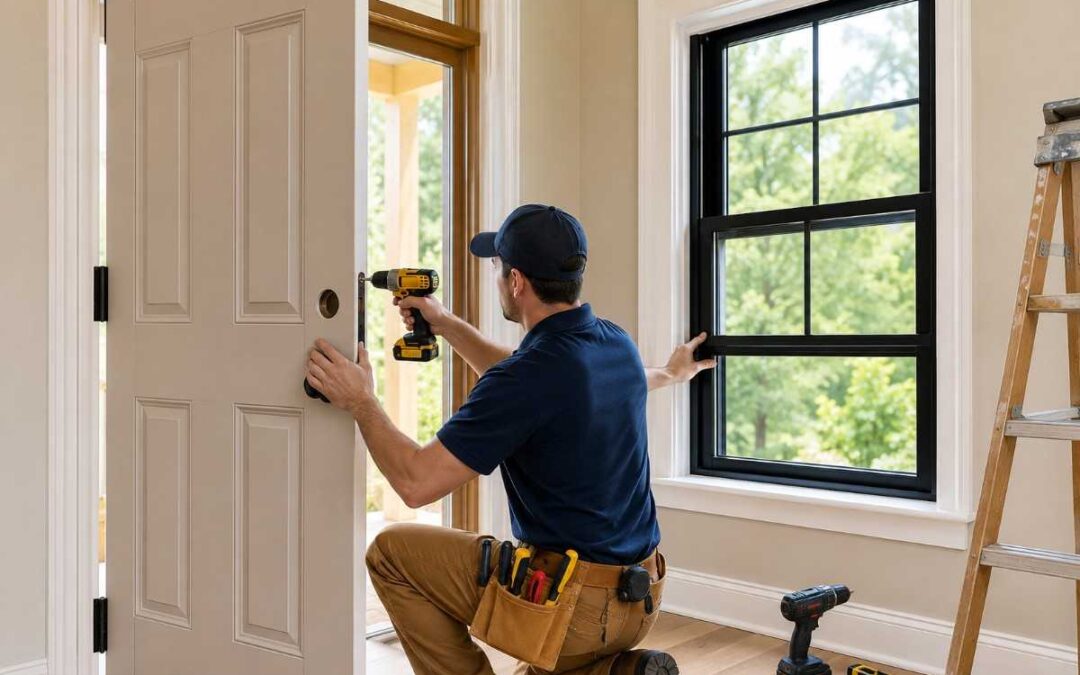
Yes, a qualified handyman can install many types of interior and exterior doors and replace standard residential windows. Handymen commonly handle projects such as entry doors, patio doors, storm doors, closet doors, interior doors, and replacement windows when no major structural modifications are required. However, if the project involves changing wall openings, structural framing, or requires permits under local building codes, hiring a licensed contractor is often the better choice.
Knowing when a handyman is the right professional can help homeowners save money, complete projects faster, and achieve quality results without unnecessary delays.
What Types of Door Installation Can a Handyman Handle?
Many homeowners rely on professional handyman services for straightforward door installation projects. An experienced handyman has the tools and practical skills needed to install or replace various residential doors.
Common door installation projects include:
- Interior bedroom doors
- Bathroom doors
- Closet doors
- Pantry doors
- Front entry doors
- Storm doors
- Screen doors
- Sliding patio doors
- French doors (standard replacements)
If the existing door frame is in good condition and no structural changes are required, a handyman can usually complete the installation efficiently.
For homeowners looking for affordable and reliable work, it’s often a smart decision to hire a handyman for door installation, especially for standard replacements that don’t require major framing or engineering modifications.
Can a Handyman Install New Windows?
Yes, many experienced handymen also provide window installation services for replacement windows. They can remove old windows, prepare the opening, install the new unit, seal gaps, and finish interior and exterior trim.
Typical window projects include:
- Single-hung windows
- Double-hung windows
- Casement windows
- Picture windows
- Sliding windows
- Basement windows
- Garage windows
A skilled handyman focuses on ensuring the window is:
- Level
- Properly insulated
- Weather sealed
- Securely fastened
- Finished neatly
Correct installation is essential because improperly installed windows can lead to drafts, water leaks, energy loss, and premature damage.
When Should You Hire a Licensed Contractor Instead?
Although a handyman can perform many installation tasks, some projects require a licensed handyman with additional certifications or a specialized home improvement contractor depending on local regulations.
You should consider a licensed professional when:
- Enlarging window openings
- Removing load-bearing walls
- Changing structural framing
- Installing oversized custom windows
- Adding new exterior doors where none existed
- Projects requiring building permits
- Historic home renovations
- Commercial construction
These jobs often involve engineering, inspections, or compliance with local building codes that extend beyond standard handyman work.
Benefits of Hiring a Handyman for Door and Window Installation
Choosing a qualified local handyman contractor offers several practical advantages for homeowners.
1. Cost Savings
Hiring a handyman is often more affordable than hiring a large remodeling company for smaller installation jobs.
2. Faster Scheduling
Most handyman businesses can schedule projects sooner than large contractors, helping homeowners complete repairs and upgrades quickly.
3. Versatile Skills
Many professionals offering door installation services also perform related tasks, including:
- Trim installation
- Weather stripping
- Caulking
- Hardware replacement
- Lock installation
- Minor drywall repair
- Painting touch-ups
Completing multiple small projects during one visit can improve value and reduce labor costs.
4. Personalized Service
Local professionals often provide more direct communication, flexible scheduling, and customized solutions based on your home’s specific needs.
Signs Your Doors or Windows Need Replacement
Sometimes repairs are no longer enough. Replacing old doors or windows can improve comfort, energy efficiency, and home value.
Common signs include:
Doors
- Difficult to open or close
- Warped frame
- Visible cracks
- Air leaks
- Water damage
- Broken locks
- Rotting wood
Windows
- Condensation between glass panes
- Drafts
- Water leaks
- Broken seals
- Difficulty opening
- Visible frame damage
- Increased energy bills
Replacing these components can improve insulation, security, and curb appeal.
How Long Does Doors and Windows Installation Usually Take?
Installation time depends on the project’s complexity.
Typical timelines include:
- Interior door replacement: 1–2 hours
- Exterior door replacement: 3–6 hours
- Sliding patio door: 4–8 hours
- Standard replacement window: 1–3 hours each
- Multiple windows: One full day or longer
Unexpected structural damage or repairs may increase the timeline.
Why Proper Doors and Windows Installation Matters?
A properly installed door or window does much more than improve appearance.
Correct installation helps:
- Prevent water intrusion
- Reduce energy bills
- Improve insulation
- Increase home security
- Extend product lifespan
- Reduce maintenance
- Improve resale value
Poor installation, on the other hand, can lead to costly repairs that outweigh the initial savings.
If you’re planning broader renovations beyond doors and windows, this guide on choosing the right home remodeling contractor offers helpful insights:
Selecting the right professional from the beginning helps ensure quality workmanship, fewer delays, and lasting value for your investment.
Frequently Asked Questions
Can a handyman replace an exterior front door?
Yes. A qualified handyman can replace most standard exterior doors if the existing frame is sound and no structural modifications are needed.
Can a handyman install replacement windows?
Yes. Many experienced handymen install replacement windows as long as the existing opening remains the same size.
Do I need a permit for door or window replacement?
In many areas, replacing an existing door or window does not require a permit. Structural changes or enlarging openings often do. Always check local building regulations.
Is hiring a handyman cheaper than hiring a contractor?
For smaller projects, yes. Handymen typically charge less than full-service contractors while still providing quality workmanship for standard installations.
How do I know if I need a contractor instead of a handyman?
If your project involves structural framing, permits, custom construction, or major remodeling, hiring a licensed contractor is generally the safer option.
How can I choose the right handyman?
Look for experience, insurance, positive customer reviews, transparent pricing, and a portfolio of completed installation projects similar to yours.
Recent Comments