
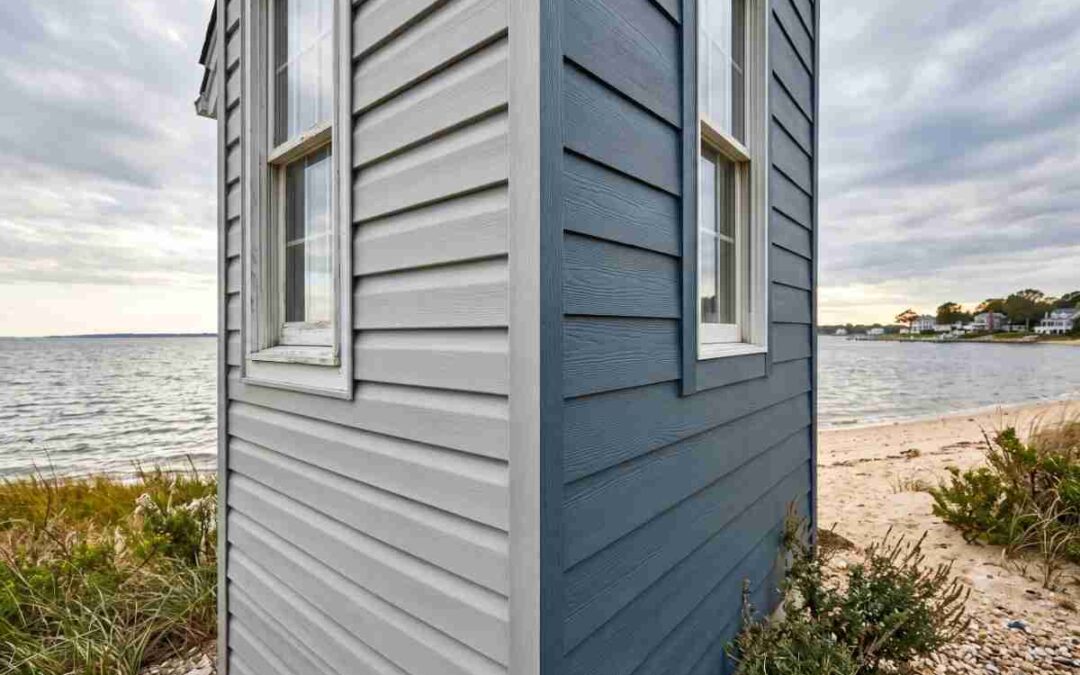
For coastal Baltimore County homes—especially in waterfront areas like Dundalk, Essex, and Middle River—fiber cement siding (such as James Hardie) is the superior long-term choice due to its resistance to high winds (up to 130 mph), salt air corrosion, rot, and coastal moisture. However, premium vinyl siding remains the most budget-friendly, low-maintenance option for homeowners seeking fast installation and good moisture resistance without periodic repainting.
Understanding Coastal Climate Challenges in Baltimore County
Living near the Patapsco River, Back River, or the upper Chesapeake Bay exposes homes in coastal Baltimore County to severe environmental elements:
-
Salt Air & Humidity: Brackish air accelerates rot, paint peeling, and fastener degradation on traditional wood siding.
-
Coastal Winds & Nor’easters: High wind gusts test panel overlap strength and wind-load ratings.
-
Freeze-Thaw Cycles: Cold Maryland winters push trapped moisture behind panels, causing expansion, cracking, or mold growth.
Choosing the right siding material comes down to balancing structural durability against upfront budget requirements.
Fiber Cement Siding: The Ultimate Coastal Shield
Fiber cement is manufactured from a heavy mixture of Portland cement, sand, water, and cellulose fibers. It engineered specifically to handle harsh marine environments.
Key Advantages for Coastal Maryland Homes:
-
Wind Resistance: Rated to withstand wind gusts up to 130 mph when installed with proper nailing patterns.
-
Moisture & Pest Resistance: Unlike natural wood, fiber cement will not warp, rot, or attract termites or woodpeckers.
-
Fire Safety: Holds a non-combustible Class A fire rating.
-
Authentic Aesthetics: Mimics real wood grain without the structural vulnerabilities of timber.
Considerations:
-
Higher Upfront Investment: Materials and heavy-labor installation cost 40% to 65% more than standard vinyl.
-
Maintenance Requirements: ColorPlus® factory-finished panels last up to 15 years, but unprimed options eventually require repainting.
Vinyl Siding: Budget-Friendly & Low Maintenance
Modern vinyl siding remains the most popular cladding choice across Baltimore County due to its affordability and minimal maintenance demands.
Key Advantages for Coastal Maryland Homes:
-
Cost Effectiveness: Delivers a significantly lower cost per square foot installed compared to wood or fiber cement.
-
Zero Painting Needed: Pigments run directly through the material, so it never requires repainting, staining, or sealing.
-
Water Resistance: Impervious to salt air corrosion and rust. Premium insulated vinyl backings also improve thermal performance.
Considerations:
-
Wind Limitations: Standard vinyl can crack or blow off under severe coastal storm winds if not specified with reinforced nail hem designs.
-
Thermal Expansion: Improper installation without adequate expansion gaps leads to panel buckling or warping during hot Maryland summers.
If your home’s exterior is showing signs of wind damage, rot, or moisture intrusion, hiring a siding installer in Dundalk MD ensures proper underlayment, code-compliant flashing, and long-lasting storm protection.
Expert Siding Installation Matters More Than Material Choice
Even the highest-grade siding will fail against Chesapeake coastal weather if the installation lacks proper envelope protection.
A professional installation must include:
-
Weather-Resistant Barriers (WRB): High-grade house wraps that allow interior vapor to escape while blocking exterior wind-driven rain.
-
Integrated Window & Door Flashing: Prevents hidden moisture from seeping into wall framing.
-
Stainless Steel Fasteners: Prevents salt air from corroding nails and causing siding displacement over time.
Frequently Asked Questions (FAQs)
Which siding material is best for high winds in coastal Maryland?
Fiber cement siding offers superior wind performance up to 130 mph due to its density and heavy framing integration, making it ideal for coastal wind zones.
Does salt air ruin vinyl siding?
No. Salt air does not corrode, pit, or rust vinyl siding. However, saltwater spray can leave salt residue, which simply requires washing off with a garden hose or soft wash solution.
Is fiber cement siding worth the extra cost in Baltimore County?
Yes. For waterfront or high-exposure properties, fiber cement delivers a higher return on investment, better curb appeal, and superior protection against severe coastal storms compared to standard vinyl.
Recent Comments