
Yes, a deck can absolutely be built on uneven ground. With proper planning, correct foundation methods, and professional installation, sloped or irregular terrain can safely support a durable, level, and long-lasting deck structure.
Building on uneven ground is common in residential properties. The key is choosing the right foundation system and construction approach based on soil condition, slope severity, drainage patterns, and local building codes.
Yes, a Deck Can Be Built on Uneven Ground — Here’s How It Works
Uneven ground does not prevent deck construction; it simply changes the structural approach. Contractors use pier footings, adjustable posts, grading, or multi-level framing to create a stable, level platform regardless of slope or elevation differences.
In real-world construction, most yards are not perfectly flat. Experienced deck builders evaluate the grade and determine whether to build up with taller posts, step the design into tiers, or partially grade the surface. The structure itself is engineered to remain level, even if the ground beneath it is not.
The Foundation Is the Most Important Factor
A strong foundation determines whether your deck will remain stable over time. Builders use concrete footings, helical piers, or reinforced posts to anchor the deck securely below frost depth and prevent shifting or settling.
On uneven terrain, footings are installed at different heights to compensate for the slope. Each footing is carefully measured to ensure the deck frame remains perfectly level. This prevents structural stress and long-term movement.
Professional installers also evaluate soil type. Clay, sandy soil, or loose fill each require different footing solutions. Ignoring soil conditions is one of the biggest causes of deck failure.
Professional Planning of Building Decks Prevents Structural Problems
Building on uneven ground requires accurate measurements, load calculations, and proper spacing between support posts. Hiring expert deck building services ensures compliance with building codes, structural safety, and long-term durability.
Decks must support live loads (people, furniture, grills) and dead loads (the structure itself). On sloped ground, improper post alignment can lead to sagging beams or unstable framing. Professionals account for load distribution and beam spans during planning.
If the slope is significant, engineering adjustments may be required. This is not a DIY-friendly scenario unless you have structural construction experience.
Multi-Level Decks Work Well on Sloped Yards
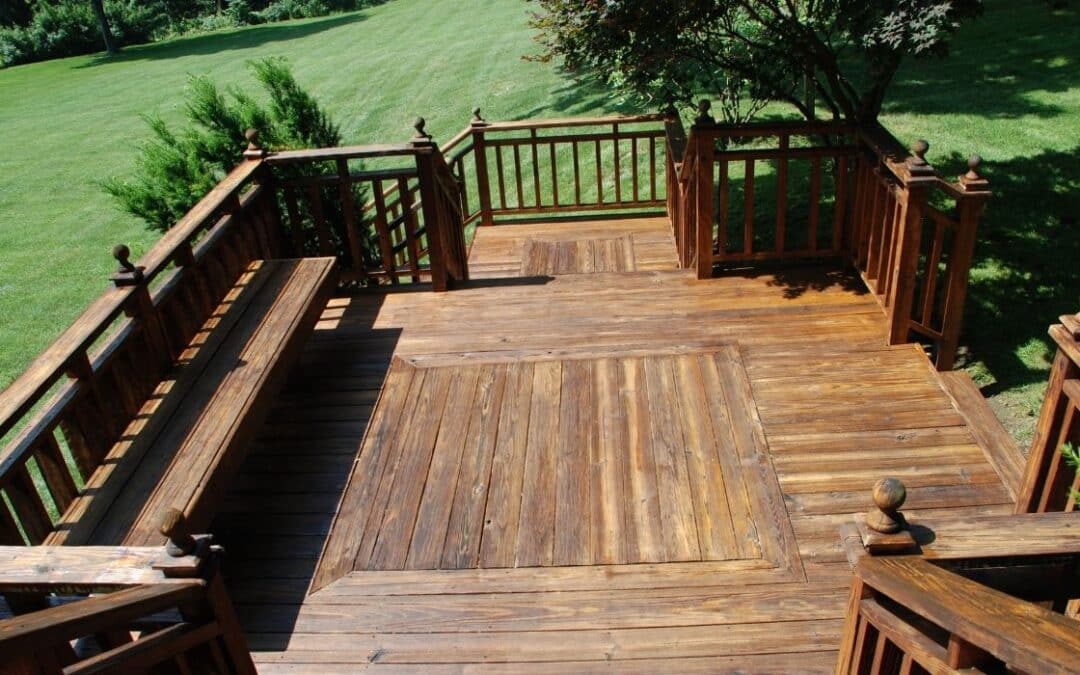
Multi-level decks are often the best solution for steep or uneven properties. Instead of fighting the slope, the design follows the natural grade, creating functional zones for seating, dining, or entertaining.
This approach reduces the need for excessive excavation and preserves landscaping. It also improves visual appeal. Many homeowners choose tiered decks because they add architectural character and maximize usable outdoor space.
If you are exploring layout inspiration, reviewing modern deck configurations can help. For example, these creative deck layout inspirations for outdoor living show how elevation changes can become a design advantage rather than a limitation.
Grading the Yard Is Sometimes an Option
Minor unevenness can sometimes be corrected through grading. Contractors may level small dips or build up low areas to create a more uniform base before construction begins.
However, major grading can be expensive and may disrupt drainage patterns. Removing too much soil can also affect property stability. For moderate to steep slopes, elevated framing is usually more practical than regrading the entire yard.
A professional site evaluation helps determine whether grading or elevated construction is the smarter investment.
Proper Drainage Is Critical on Uneven Terrain
Uneven ground often affects water flow. Without proper drainage planning, water can pool around footings and compromise structural integrity over time.
Experienced builders incorporate drainage strategies such as gravel bases, slope adjustments, and spacing beneath deck boards for ventilation. Keeping water away from footings prevents erosion and frost heave.
Deck longevity depends heavily on moisture management. This is especially important in regions with heavy rainfall or freeze-thaw cycles.
Building Codes Must Be Followed Carefully
Local building codes regulate footing depth, railing height, load capacity, and structural connections. Uneven ground does not exempt a project from these requirements.
Permit inspections ensure safety and compliance. Professional contractors understand how to meet code requirements while adapting to slope challenges. Failure to comply can result in fines or unsafe construction.
If your deck is attached to your home, additional considerations apply, including ledger board installation and waterproof flashing.
Adjustable Post Systems Make Leveling Easier For Modern Deck
Modern deck construction often uses adjustable post brackets or precision-cut support posts. These systems allow builders to fine-tune height differences caused by uneven ground.
Each post is measured individually. Laser levels and string lines ensure the frame remains perfectly straight across varying elevations.
This precision prevents long-term issues such as uneven decking boards or railing misalignment.
Cost Factors for Building Decks on Uneven Ground
Building a deck on uneven ground can cost slightly more than building on flat terrain. The increase depends on slope severity, foundation complexity, and design style.
Additional costs may include:
-
Deeper or additional footings
-
Taller support posts
-
Engineering consultation
-
Multi-level framing
-
Drainage improvements
However, uneven terrain does not automatically mean excessive expense. In many cases, elevated decks require less excavation than attempting to flatten the yard entirely.
A site-specific estimate provides accurate budgeting.
DIY vs. Hiring a Professional Deck Builders
While small, low-level decks on mildly uneven ground may be DIY-friendly, most sloped-yard projects require professional expertise.
Common DIY mistakes include:
-
Improper footing depth
-
Uneven beam spacing
-
Poor load calculation
-
Inadequate drainage planning
These errors can lead to structural instability, premature wear, or safety hazards.
Professionals bring experience, engineering knowledge, and code compliance awareness. That expertise protects your investment and ensures your deck lasts for decades.
Safety and Longevity of Deck Should Be the Priority
A deck built on uneven ground must remain stable in all weather conditions. High winds, heavy gatherings, and seasonal temperature changes test structural integrity.
Using pressure-treated lumber, corrosion-resistant fasteners, and properly anchored footings extends the lifespan of the structure.
Routine maintenance — including sealing, cleaning, and annual inspections — further protects the deck against moisture damage and structural wear.
When properly built, a deck on uneven ground can last 15–30 years or more, depending on materials and maintenance.
When Is Deck on Uneven Ground a Problem?
Severely unstable soil, active erosion, or extreme slopes may require additional engineering solutions. In rare cases, retaining walls or soil reinforcement may be necessary before deck construction begins.
A professional site assessment identifies red flags early. Ignoring these issues can compromise both the deck and surrounding landscaping.
Fortunately, most residential properties with moderate slopes are completely suitable for deck installation with the right construction strategy.
Final Answer
Building a deck on uneven ground is not only possible — it is common. The success of the project depends on foundation quality, structural design, drainage planning, and adherence to building codes.
With expert planning and proper construction methods, uneven terrain becomes an opportunity rather than a limitation. Elevated designs, tiered layouts, and precision footings allow homeowners to create beautiful, stable outdoor living spaces on virtually any grade.
If you’re considering adding a deck to your property, start with a professional site evaluation. The right approach ensures your deck is safe, level, and built to last — no matter how uneven the ground may be.
Recent Comments